
#fear #polarisation #freeThinking #culture #debate #cult #diversity
Understanding How Fear Fuels Anger and Division in Society by Matthew Hill
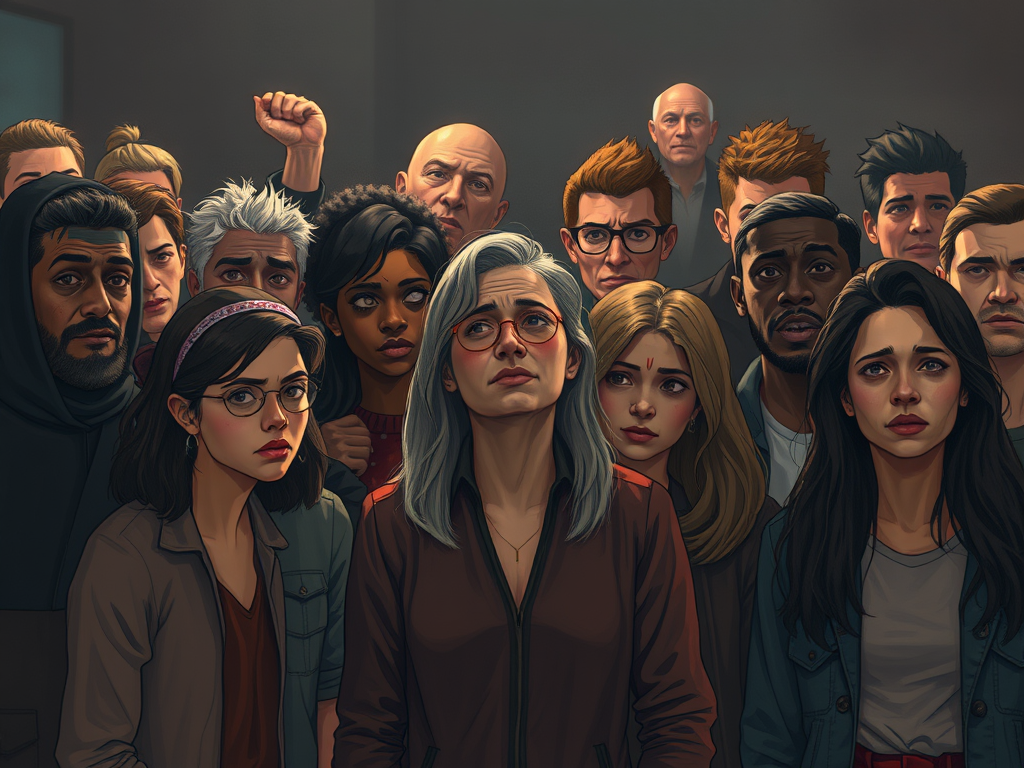
Many people believe their anger will put them “on the right side of history.” If that’s you, fair enough — that’s what you’ve chosen to believe. But the truth is often less flattering. What we sometimes call righteous anger can actually be a reaction to something much simpler: the human need to belong to a group.
WhThe Cycle of Fear: From Belonging to Hatred
Most of us want to fit in with the group we identify with – politically, culturally, socially, or morally. To stay aligned with that group, we sometimes have to explain away contradictions or uncomfortable feelings. That’s where things get messy. Anger comes first. Then comes justification. Soon after, anger hardens into something stronger.
“It’s Not Hate!”
Actually… it often is.
Hate is an intense, learned emotion. It shows up as extreme dislike or hostility toward people, groups, or ideas. It’s usually fuelled by fear, anger, manipulation, or prejudice. There’s no shortage of hate in 2026 – yet almost no one is willing to admit they feel it.
No one wants to wear the “hater” label.
No one wants to defend their hatred openly.
Interesting, isn’t it?
How We Rationalise Hate
To avoid admitting what we’re doing, we tell ourselves stories. We build narratives about “the other side” – stories that are exaggerated, repeated, and polished until they feel like facts. These stories focus on:
- their supposed moral failure
- their bad intentions
- their inherent weakness or evil
Over time, these stories become self-reinforcing. For uncritical thinkers, they feel unquestionably true.
Simplifying the Enemy
For hate to survive, the target must be simple. All negative traits are rolled into one character. No complexity. No redeeming qualities. The enemy can do no good – ever.
If a dictator cured cancer, we’d find a way to blame them for job losses among doctors. That’s how total vilification works.
Adult Accountability Time
Here’s the uncomfortable part. If you’re constantly vilifying, dehumanising, or celebrating the downfall of others – that’s hate. Even if it clashes with how you see yourself. Even if your mother raised you to be “a good person.”
At some point, we all have to take responsibility for what we’re putting out into the world:
- our emotions
- our thoughts
- our words
- our actions
***Intentions don’t erase impact***
What Are You Really Reacting To?
Instead of pushing the hateful cart faster, it’s worth looking at the horse pulling it.
What’s actually driving this reaction…
*Fear?
*Insecurity?
*A need for certainty?
*A desire to belong?
Help Is Closer Than You Think
When you start examining where these feelings come from – rather than projecting them outward – something surprising happens.
You feel lighter.
Calmer.
More in control.
Understanding what’s really “revving you up” doesn’t make you weak. It makes you honest – and free.
Mechanisms: How Fear Turns Into Anger and Division
Anger often looks like the problem – but fear is where it really begins.
To understand what’s happening in our culture, it helps to separate useful fear from misused and manipulated fear. Fear originally evolved to keep us alive. Today, the same mental wiring is often exploited, amplified, or redirected – especially in 2026.
Let’s break this down.
Fear: Where It Started
Fear began as a survival tool. Our animal brain learned to spot danger quickly so we wouldn’t get eaten, crushed, or killed. That programming still exists – and when it’s used appropriately, it works very well.
Problems arise when fear is pushed beyond what the situation actually requires.
A Simple Example
Hearing a train horn while standing on railway tracks?
***Good fear. You move out of the way and survive.
Feeling a surge of panic, rage, or dread when a political leader’s name is mentioned?
***That’s no longer practical fear – it’s a phobic reaction.
Types of Fear (And Why They Matter)
1. Functional Fear (Healthy and Necessary)
This is the fear that keeps us safe in everyday life. When driving, walking, or cycling, we watch for signals that warn us of danger:
- other vehicles
- poor road conditions
- pedestrians
- loss of balance or control
We’ve learned what can harm us, and we adjust our behaviour. This fear is calm, proportional, and effective. It helps us get home safely.
2. Phobic Fear (Too Strong for the Situation)
Phobias happen when fear becomes exaggerated and disconnected from real danger. Common examples include:
- spiders or snakes
- public speaking
- humiliation or being wrong
- being “found out”
- even the name, image, or symbol of a person or group
This kind of fear overwhelms logic and leads to avoidance, aggression, or paralysis. The goal isn’t to eliminate fear, but to turn the volume back down to a level that matches reality.
3. Manipulated Fear (Designed to Divide)
Humans are highly influenceable – especially through emotional storytelling. Well-edited videos, selective news clips, and repeated messages can shape our fears very quickly. Social media and mainstream media do this daily. Manipulation works best when:
- the message comes from our side
- it confirms what we already believe
- it’s repeated often
- it’s echoed by our group
Under these conditions, we stop thinking independently. In less than 90 seconds, fear can be linked to a trigger – a person, group, or idea – creating a conditioned emotional reaction.
4. Group Dynamics (The Comfort of the Tribe)
Belonging feels good.
To be accepted by a group, many of us willingly give up the harder work of individual thinking and responsibility. It’s easier to copy the beliefs, language, and reactions of the tribe. “Monkey see, monkey do” becomes the norm – and questioning is quietly discouraged.
5. Evolutionary Fear (When Caution Makes Sense)
Some fear between groups developed for survival reasons:
- real historical threats
- repeated negative experiences
- passed-down stories and warnings
This kind of caution can be functional. It helps us assess risk and avoid harm. However, when these stories are exaggerated or frozen in time, they can turn into permanent suspicion or hostility – even when the original threat no longer exists.
When Fear Becomes Dangerous
There’s a crucial difference between:
Responding to real environmental threats, and creating enemies and channelling fear into hatred or violence
Our brains evolved to read body language, danger, and environment. These systems once protected us. Today, those same systems are being hijacked to push people into emotional states where they are willing to sacrifice themselves, or others, for a cause.
Weaponised Fear (Fear as a Recruitment Tool)
This is fear in its most destructive form. Polarised groups actively recruit by:
- repeating false, spun or exaggerated stories
- creating “bogeymen”
- catastrophising outcomes
- using selective statistics
- presenting opinions as facts
- showing only one side of a story
Belonging often comes with conditions:
- accepting the mantra of the organisation
- repeating the skewed narrative
- abandoning independent thought
This isn’t debate – it’s belief. Journalism, in many places, has been replaced by persuasion.
Making Better Distinctions
Here’s where personal responsibility comes back in. Ask yourself:
- What threats in my environment are genuinely real?
- What fears have I been encouraged to adopt? And Why? Who benefits?
- What am I being asked to comply with and repeat by my group?
- Which type of fear is actually operating here?
Are these fears helping me live a healthier, safer life, or are they asking me to sacrifice my thinking, my values, or even people I’ve never met?
A Final Question
Does your latest fear truly serve you? And did you develop it through careful thought
Or…Was it handed to you by a powerful influencing group?




Leave a Reply